Concrete cracking is one of the most common technical challenges in engineering construction. Its causes are complex and its types diverse, affecting not only the aesthetics of the structure but also potentially compromising its durability and safety. Therefore, a deep understanding of the formation mechanisms of different types of cracks and the implementation of targeted prevention and treatment measures are crucial for ensuring the quality of concrete engineering projects. Modern concrete technology has developed a comprehensive prevention and control system integrating materials science, construction techniques, and meticulous curing. The following section will systematically review the causes of several common concrete cracks and their comprehensive countermeasures.

1. Plastic shrinkage cracks
Plastic shrinkage typically occurs in the semi-fluid or plastic stage of concrete and is a volume change caused by a combination of factors, including settlement, capillary tension, early chemical shrinkage, and autogenous shrinkage. Most plastic cracks are caused by horizontal plastic shrinkage, occurring primarily around the initial setting stage of concrete. At this time, the concrete mixture loses its fluidity and has very low strength; even low-level shrinkage deformation can generate stress sufficient to cause cracking. Plastic shrinkage cracks mainly occur on the surface, are irregular, and shallow, and are related to the tensile stress created by rapid water loss from the concrete surface.

Countermeasures:
(1) Construction and curing measures: Before pouring concrete, the formwork should be fully moistened to reduce its water absorption. During pouring, ensure that there is no leakage or over-vibration. Strengthening early water retention and curing is fundamental. After pouring, plastic film should be covered in time, curing agent should be sprayed or water should be continuously sprinkled to prevent surface moisture evaporation.
(2) Application of additives:
• Use water-reducing agents (especially high-performance polycarboxylate water-reducing agents): Reduce water usage while ensuring workability, reduce the free water that can be lost from concrete, and reduce plastic shrinkage from the source.
 
• Introduce water-retaining components or thickeners (such as cellulose ethers): Improve the cohesiveness and water retention of the mixture, effectively preventing water from rising and evaporating too quickly.
• In special cases, shrinkage-reducing agents can be used: directly reducing the surface tension of capillary water and decreasing shrinkage stress.
2. Settlement shrinkage cracks
Settlement shrinkage cracks occur during concrete construction when the mixture is unstable. Under the influence of vibration and gravity, coarse aggregates settle while water rises, causing stratification. When the settling aggregates encounter obstacles such as reinforcing bars, the upper material is trapped while the lower material continues to settle, thus forming cracks at the obstacle.
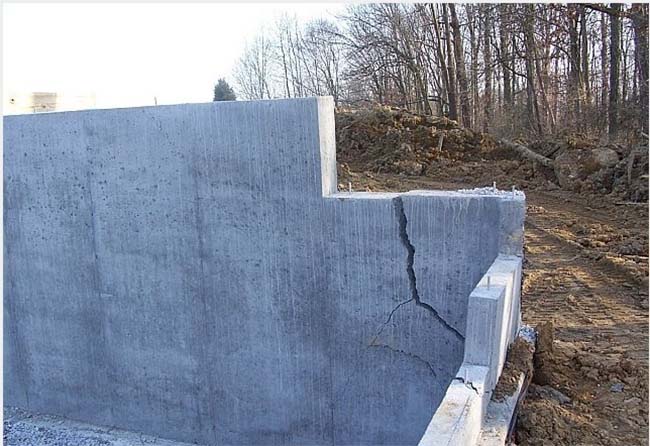
Countermeasures:
(1) Construction and mix proportion measures: Optimize the concrete mix proportion to ensure good homogeneity, control the aggregate gradation and sand ratio, and avoid segregation and bleeding. For components with dense reinforcement or large vertical height, pour in layers and extend the vibration time appropriately.
(2) Application of additives:
• Use thickeners or stabilizers (such as cellulose ethers or modified starch ethers): These significantly improve the cohesiveness and stability of the mixture , enhancing its resistance to aggregate settling and water rising, which is one of the most effective means of controlling settlement cracks.
• Use air-entraining agents appropriately: The introduced microbubbles can provide support and lubrication, increase the cohesion of the mixture, and improve its stability.
3. Drying shrinkage cracks
Drying shrinkage cracks occur when the volume shrinkage deformation caused by the evaporation of moisture inside the concrete is constrained. These cracks can be wide, deep, or even penetrating, or they can appear as a network of fine cracks around the aggregate.

Countermeasures:
(1) Construction and curing measures: Strengthening and extending curing is a crucial measure. Good curing can delay the occurrence of drying shrinkage and improve the early tensile strength of concrete, enhancing its ability to resist drying shrinkage stress.
(2) Application of additives:
• Use shrinkage reducing agents: These are the most effective chemical additives for directly targeting drying shrinkage, and can significantly reduce the final drying shrinkage value of concrete.
• Use a swelling agent (must be combined with adequate moisturizing care): It produces moderate expansion in the early stages of hardening to compensate for the later drying and shrinkage.
• Use water-reducing agents: Reduce water consumption and the total amount of evaporable water, thereby reducing shrinkage.
4. Temperature cracking
As cement hydration releases heat, concrete expands due to temperature rise, and then cools and contracts to dissipate heat. When this volume change is constrained by internal and external factors, it generates thermal stress. When the stress exceeds the tensile strength of the concrete, cracks form.

Countermeasures:
(1) Construction and material measures: Low-heat cement is used, the mix ratio is optimized, and internal cooling and surface insulation are carried out on the large-volume concrete to control the temperature difference between the inside and outside.
(2) Application of additives:
• Use retarders: slow down the cement hydration rate, reduce the peak heat of hydration, allow heat to be released slowly, and reduce temperature gradient and stress.
• Large-scale use of mineral admixtures (such as fly ash and slag powder): This is one of the most crucial material methods for controlling temperature rise. Replacing cement with these admixtures in large quantities can significantly reduce the total heat of hydration, addressing the temperature problem at its source.
5. Self-shrinkage cracking
Autogenous shrinkage is the shrinkage that occurs when cement hydration consumes internal moisture, leading to a decrease in the internal humidity of the system and resulting in "self-drying" shrinkage. This is particularly noticeable in high-performance, low water-cement ratio concrete.

Countermeasures:
(1) Construction and mix proportioning measures: Under the premise of ensuring strength, appropriately increase the water-cement ratio or increase the amount of aggregate. Early moisturizing and curing is crucial to provide an external water source for cement hydration.
(2) Application of additives:
• Use internal curing materials (such as superabsorbent polymer (SAP) resin, lightweight porous ceramic sand): This is an efficient way to solve autogenous shrinkage. These materials absorb water during mixing and slowly release water as the cement hydrates and dries internally, thus effectively compensating for internal humidity and inhibiting autogenous shrinkage.
• Use retarders and mineral admixtures (fly ash, slag powder): Delay the early hydration rate and reduce the degree of early hydration, thereby slowing down the self-drying process.
In conclusion, controlling cracks in modern concrete is a systematic project requiring close integration of materials, construction, and curing to form multiple lines of defense. At the materials level, the scientific selection of various additives (such as water-reducing agents, thickeners, retarders, shrinkage-reducing agents, and mineral admixtures) can fundamentally optimize the workability, stability, heat of hydration, and shrinkage characteristics of concrete, thereby enhancing its inherent crack resistance. At the construction and curing level, careful mix design, thorough vibration, timely troweling, and early, sufficient, and continuous moisture retention curing are crucial external guarantees for ensuring the realization and consolidation of concrete performance. Only by combining advanced materials technology with lean construction and curing practices can the most comprehensive and efficient control of concrete cracks be achieved.
Essential Questions and Answers in the Application of Polycarboxylate Superplasticizers
Precautions for the application of polycarboxylate superplasticizers (Technical details)
Application of Silica Fume in Concrete from the Perspective of Its Mechanism of Action
The Role of Silica Fume in Concrete-Optimizing Microstructure, Enhancing Macro Performance
14 Must-See Products at the Upcoming Concrete Show South America 2025
The Impact of Silica Fume on Concrete Performance
Silica fume (microsilica) as a Concrete Admixture
The Role of Silica Fume in UHPC
2fcl Microsilica as a trial order to South America market
Wide uses in the refractory industry of silica fume
Introduction of Cement Content-reducing Admixture (II): Technical Analysis of Cement Content-Reducing Admixtures
Introduction of Cement Content-reducing Admixture (I): The role of Cement Content-reducing Admixture and its influence on concrete strength
Comprehensive Analysis of Powder Water-Reducing Admixtures
Incorporation Methods and Considerations for Functional Concrete Admixtures
Several considerations for selecting functional concrete materials
Boosting Concrete Efficiency: The Power of Admixture Synergy
The Role of Silica Fume in UHPC
Enhancing Concrete Quality: Strategies to Address Common Issues with Water-Reducing Admixtures
Polycarboxylate Superplasticizers in Concrete: Addressing Common Challenges and Implementing Effective Solutions
Optimizing Admixture Compatibility for Robust Concrete: Strategies to Enhance Durability and Workability
Research on the Impact of Solid Content in Water-Reducing Admixtures on Concrete Performance
Delayed Setting and Hard Crust Phenomenon in Concrete
The effect of polycarboxylate superplasticizer on the strength and hydration performance of alkali slag building materials
Mastering Water Reducers: Expert Solutions for Six Types of 'Problem' Cement
Optimizing Concrete with Polycarboxylate Superplasticizers: Tackling Challenges and Boosting Performance
Ensuring High-Quality Concrete: Tackling Bleeding, Segregation, and Paste Bleeding in Concrete Mixtures
Unlocking the Secrets of Polycarboxylate Superplasticizers: Synthesis and Advanced Dispersing Mechanisms Demystified
Optimizing Concrete Performance with Polycarboxylate Superplasticizers: A Comprehensive Guide to Spring Season Adjustments
The adaptability of polycarboxylic acid admixture and other raw materials of concrete
Research on Concrete Admixture testing and its application
Causes and prevention measures of 8 appearance defects of concrete structures
Precautions when using polycarboxylate superplasticizer(PCE) in concrete
The role of defoaming agents in Concrete
Regarding the compound raw materials of polycarboxylate water-reducing agent
Three Key Considerations for Additive Usage in Concrete Production
Fiber Reinforced Concrete: Types, Properties and Applications
Some common problems in the application of PCE
About the overdosage of concrete water reducer
How to deal with mildew of Polycarboxylate Superplasticizer
Effects of Admixtures and Admixtures on the Properties of Cement Concrete
Common problems and analysis of polycarboxylate water reducer in ready-mixed concrete
Retarders and Concrete Setting
How to select and use concrete admixtures
Tips of application of polycarboxylate high-performance water reducer(VII)
Tips of application of polycarboxylate high-performance water reducer(VI)
Tips of application of polycarboxylate high-performance water reducer(V)
Tips of application of polycarboxylate high-performance water reducer(IV)
Tips of application of polycarboxylate high-performance water reducer(III)
Tips of application of polycarboxylate high-performance water reducer(II)
Tips of application of polycarboxylate high-performance water reducer(I)
The quality of concrete can be improved with the help of burnt straw.
The price of concrete admixture’s raw materials is rising rapidly recently!
About Polyether Macromonomers and Polycarboxylate Superplasticizer(PCE)
Suggestion on "The Slump loss of concrete by using polycarboxylate superplasticizer (PCE) "
The 23 most popular Concrete Admixtures of global market
Polycarboxylate Superplasticizer (PCE) 50% liquid export to Russia under the COVID-19 pandemic
Polycarboxylate superplasticier 50% liquid export to Vietnam in Flexi bag
TPEG+HPEG export to Middle East market
Polycarboxylate superplasticizer +shrinkage-reducing agent +defoaming agent +air-entraining agent
We made a speech at PCE 2019 !
PCE heat resistant grade export to Russian market
PCE powder export to Indonesia !
Flexi bag: A new package for polycarboxylate superplasticizer 50% liquid (POLYETHERS IN PRIMARY FORMS)
PCE Introduction download
Descargar la introduccion
The quality of concrete can be improved with the help of burnt straw.
NOR containers help to save the cost at so high sea freight level !
The 23 most popular Concrete Admixtures of global market
SNF 3% EXPORTED
Sodium Naphthalene formaldehyde loaded today for PT.Kao indonesia on this weekend vessel. |


