I. Mechanism of Silica Fume in Concrete
The mechanism of Silica fume in concrete is a synergistic effect of physical and chemical actions, which operates through three fundamental dimensions: microstructural filling, hydration reaction modification, and interfacial optimization. Owing to its ultrafine particle size and high pozzolanic reactivity, silica fume improves concrete performance from the molecular level.
1. Physical Filling Mechanism: “Micro-Level Filler” Densifying the Concrete Skeleton
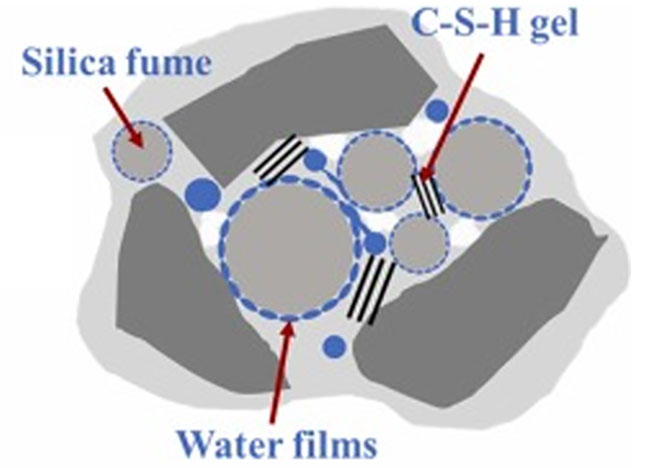
Silica fume particles have an average size of 0.1–0.3 μm (about 1/50–1/100 of cement particles) and a specific surface area of 20–25 m²/g. This ultrafine particle feature enables it to act as an extremely fine microfiller, refining the concrete’s internal structure through a three-stage filling mechanism:
(1) Primary filling- Filling voids between cement particles
Cement particles typically range from 3–30 μm, leaving natural voids of 1–5 μm. Silica fume particles can enter and fill these gaps, effectively embedding “ultrafine aggregates” into the cement matrix. This reduces large capillary pores (>50 nm) within the concrete structure.
(2) Secondary filling- Filling voids within hydration products
Hydrated calcium silicate (C–S–H) gels formed during cement hydration have fibrous or flocculent structures containing micropores (10–50 nm). Ultrafine silica fume particles can penetrate these gel structures, filling the microvoids and making the C–S–H gel denser, thus reducing the pathways for water and aggressive ions.
(3) Tertiary filling- Improving the aggregate–paste interfacial transition zone (ITZ)
In ordinary concrete, the ITZ between aggregate and cement paste is weak due to local water accumulation, resulting in porous Ca(OH)₂ crystal layers (>100 nm). Silica fume adsorbs onto aggregate surfaces and fills interfacial pores while chemically reacting with Ca(OH)₂ (as detailed later). This reduces the ITZ thickness from 50-100 μm (ordinary concrete) to 10-20 μm (Silica fume concrete), significantly increasing bond strength.
Through these three levels of filling, the total porosity of concrete can be reduced from 20-25% to 10-15%, and the proportion of harmful pores (>50 nm) decreases from over 60% to below 20%, establishing the physical foundation for high strength and durability.
2. Chemical Reactivity Mechanism: “Secondary Hydration” Reconstructing Hydration Products
Silica fume consists primarily of amorphous SiO₂ (≥90%), and its chemical role lies in the secondary hydration reaction with Ca(OH)₂ (a weak phase produced during cement hydration). This reaction optimizes the microstructure by converting weak phases into high-strength C–S–H gels, occurring in three stages:
(1) Initiation stage (1–3 days)
Early cement hydration (mainly of C₃S and C₂S) produces abundant Ca(OH)₂ crystals (hexagonal plates with low strength ~3–5 MPa). Due to its high surface area, silica fume adsorbs Ca²⁺ and OH⁻ ions; the amorphous SiO₂ begins to dissolve, forming soluble silicate ions (SiO₃²⁻).
(2) Acceleration stage (3–28 days)
The dissolved silicate ions react with Ca²⁺ to form low-calcium C–S–H gel (Ca/Si ≈ 1.2–1.4, compared to 1.6–2.0 for normal C–S–H). This gel is denser and more cross-linked, providing 30–50% higher intrinsic strength. It envelops unhydrated cement particles, creating a continuous strength-bearing skeleton.
(3) Stabilization stage (after 28 days)
As the secondary hydration continues, Ca(OH)₂ content decreases substantially (by 40–50% when 8% silica fume is added). Weak Ca(OH)₂ crystals are largely replaced by strong low-calcium C–S–H gel, yielding a homogeneous microstructure. Unreacted silica fume (10–20% of total dosage) acts as inert microfiller, occupying residual microvoids formed later, ensuring continuous strength gain (56-day strength can be 10–15% higher than 28-day).
3. Interfacial and Rheological Mechanism: Balancing Workability and Stability
Silica fume not only improves structural and compositional aspects but also affects rheology (flowability and cohesion) and interfacial bonding through surface interactions and dispersion behavior:
(1) Influence on rheology — from agglomeration hindrance to dispersion optimization
- Without compatible superplasticizer:
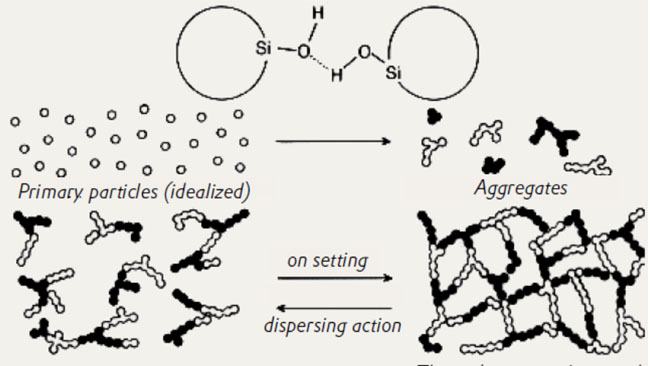
Silica fume particles easily form micron-sized agglomerates (5–20 μm) due to hydrogen bonding and van der Waals forces. These clusters absorb free water and act as rigid micro-particles, leading to increased viscosity and significant slump loss (e.g., >40% slump reduction with 5% silica fume).
- With high-range water reducer (PCE-based):
Polycarboxylate superplasticizers adsorb onto silica fume surfaces via anchoring groups (–COOH), while polyether side chains extend into water, providing steric hindrance and electrostatic repulsion. This breaks agglomerates, releases absorbed water, and restores or even enhances flowability (slump 180–220 mm). Dispersed silica fume also reduces bleeding and segregation.
(2) Strengthening of aggregate–paste interface — from weak transition to strong bonding
- Physical adhesion:
Silica fume particles form an adsorption layer on aggregate surfaces, providing a buffer layer that bonds strongly with C–S–H gel, reducing porosity and microcracks in the ITZ.
- Chemical bonding:
Silica fume reacts with Ca(OH)₂ enriched at the aggregate surface (due to delayed hydration), forming low-calcium C–S–H gel directly on the aggregate. This establishes chemical bonds that increase interfacial bond strength by 50–80%, preventing premature interfacial cracking.
The role of silica fume is not the simple sum of physical filling, chemical reaction, and interfacial modification, but a synergistic integration of the three:
- Physical filling provides the space and structure for secondary hydration.
- Chemical reaction provides high-strength C–S–H gel for structural reinforcement.
- Interfacial optimization ensures uniform dispersion and stable bonding.
This synergy makes silica fume an indispensable functional admixture in producing ultra-high-strength and highly durable concrete.
II. Key Application Scenarios of Silica Fume
Silica fume is primarily applied in concretes requiring high strength, low permeability, and exceptional durability, typically in the following areas:
1. High-Strength Concrete (HSC)
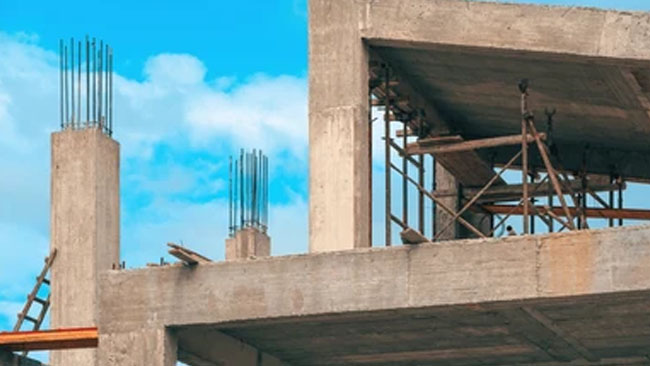
Essential for C80 and above. Typical uses: core walls of high-rise buildings, prestressed beams, and bridge anchorage zones. Through its microfilling and secondary hydration effects, silica fume enables compressive strength exceeding 100 MPa (28 days) with superior load-bearing and deformation resistance.
2. Anti-Corrosion Concrete
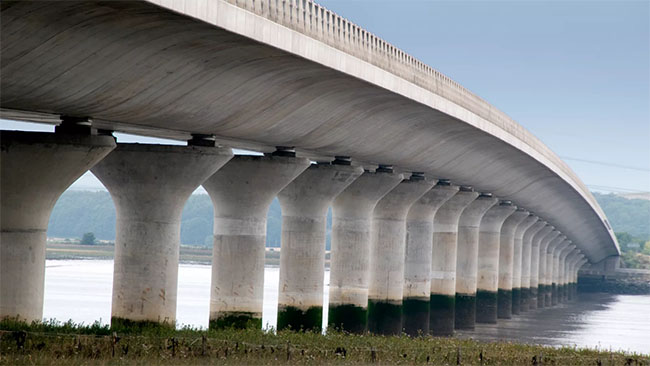
For structures exposed to aggressive environments:
- Marine works: sea walls, piers, and bridge piles-resistance to chloride-induced rebar corrosion.
- Chemical plants: foundations under acid/alkali tanks-resistance to sulfate and organic acid attack.
- Wastewater treatment: tanks and oxidation ditches-reduced permeability to harmful substances.
3. Freeze- Thaw Resistant Concrete
In cold climates or cyclic freeze–thaw environments, silica fume minimizes pore volume and ice expansion damage. Applied in bridge decks, pavements, aqueducts, and reservoirs, it improves freeze–thaw grade from F100 to F300 or above, significantly extending service life.

4. Abrasion- and Erosion-Resistant Concrete
Silica fume enhances surface hardness and density, providing higher resistance to mechanical wear and hydraulic scouring:
- Industrial floors: heavy-duty factory or logistics warehouse floors — 40–60% higher abrasion resistance.
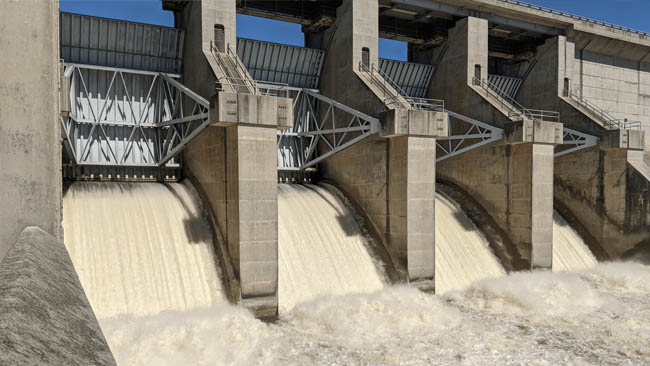
- Hydraulic structures: spillways, slopes, sluice chambers — improved anti-scour performance, reducing damage from high-velocity flow.
5. Shotcrete (Sprayed Concrete for Support)
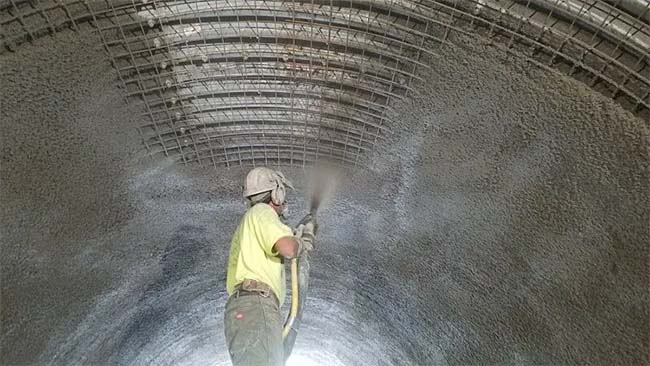
In tunnels, mines, and retaining works, silica fume increases cohesiveness and water retention, reducing rebound losses during spraying. It also accelerates early strength development, ensuring rapid load-bearing and construction safety.
Silica fume enhances concrete through a triple synergistic mechanism-microstructural densification, chemical strengthening, and interfacial optimization-making it a core material for high-performance, durable, and sustainable concrete engineering.In today’s construction industry, high strength and durability define quality. Silica fume (microsilica), an ultrafine pozzolanic material with particles about 100 times smaller than cement, is reshaping concrete technology worldwide.Through micro-filling, secondary hydration, and interfacial densification, Silica fume refines the concrete microstructure, reduces porosity, and converts weak Ca(OH)₂ phases into dense, high-strength C–S–H gel. The result: compressive strength over 100 MPa, excellent impermeability, and long-term durability even under harsh marine, chemical, or freeze–thaw environments.From high-rise cores and bridge anchors to marine structures, industrial floors, and shotcrete support, Silica fume enables concrete to achieve superior performance, extending service life and reducing maintenance costs.
At SURE CHEM, we provide high-reactivity silica fume optimized for concrete admixtures, precast elements, and infrastructure projects — helping our partners build stronger, longer-lasting, and more sustainable concrete around the world.

The Role of Silica Fume in Concrete-Optimizing Microstructure, Enhancing Macro Performance
14 Must-See Products at the Upcoming Concrete Show South America 2025
The Impact of Silica Fume on Concrete Performance
Silica fume (microsilica) as a Concrete Admixture
The Role of Silica Fume in UHPC
2fcl Microsilica as a trial order to South America market
Wide uses in the refractory industry of silica fume
Introduction of Cement Content-reducing Admixture (II): Technical Analysis of Cement Content-Reducing Admixtures
Introduction of Cement Content-reducing Admixture (I): The role of Cement Content-reducing Admixture and its influence on concrete strength
Comprehensive Analysis of Powder Water-Reducing Admixtures
Incorporation Methods and Considerations for Functional Concrete Admixtures
Several considerations for selecting functional concrete materials
Boosting Concrete Efficiency: The Power of Admixture Synergy
The Role of Silica Fume in UHPC
Enhancing Concrete Quality: Strategies to Address Common Issues with Water-Reducing Admixtures
Polycarboxylate Superplasticizers in Concrete: Addressing Common Challenges and Implementing Effective Solutions
Optimizing Admixture Compatibility for Robust Concrete: Strategies to Enhance Durability and Workability
Research on the Impact of Solid Content in Water-Reducing Admixtures on Concrete Performance
Delayed Setting and Hard Crust Phenomenon in Concrete
The effect of polycarboxylate superplasticizer on the strength and hydration performance of alkali slag building materials
Mastering Water Reducers: Expert Solutions for Six Types of 'Problem' Cement
Optimizing Concrete with Polycarboxylate Superplasticizers: Tackling Challenges and Boosting Performance
Ensuring High-Quality Concrete: Tackling Bleeding, Segregation, and Paste Bleeding in Concrete Mixtures
Unlocking the Secrets of Polycarboxylate Superplasticizers: Synthesis and Advanced Dispersing Mechanisms Demystified
Optimizing Concrete Performance with Polycarboxylate Superplasticizers: A Comprehensive Guide to Spring Season Adjustments
The adaptability of polycarboxylic acid admixture and other raw materials of concrete
Research on Concrete Admixture testing and its application
Causes and prevention measures of 8 appearance defects of concrete structures
Precautions when using polycarboxylate superplasticizer(PCE) in concrete
The role of defoaming agents in Concrete
Regarding the compound raw materials of polycarboxylate water-reducing agent
Three Key Considerations for Additive Usage in Concrete Production
Fiber Reinforced Concrete: Types, Properties and Applications
Some common problems in the application of PCE
About the overdosage of concrete water reducer
How to deal with mildew of Polycarboxylate Superplasticizer
Effects of Admixtures and Admixtures on the Properties of Cement Concrete
Common problems and analysis of polycarboxylate water reducer in ready-mixed concrete
Retarders and Concrete Setting
How to select and use concrete admixtures
Tips of application of polycarboxylate high-performance water reducer(VII)
Tips of application of polycarboxylate high-performance water reducer(VI)
Tips of application of polycarboxylate high-performance water reducer(V)
Tips of application of polycarboxylate high-performance water reducer(IV)
Tips of application of polycarboxylate high-performance water reducer(III)
Tips of application of polycarboxylate high-performance water reducer(II)
Tips of application of polycarboxylate high-performance water reducer(I)
The quality of concrete can be improved with the help of burnt straw.
The price of concrete admixture’s raw materials is rising rapidly recently!
About Polyether Macromonomers and Polycarboxylate Superplasticizer(PCE)
Suggestion on "The Slump loss of concrete by using polycarboxylate superplasticizer (PCE) "
The 23 most popular Concrete Admixtures of global market
Polycarboxylate Superplasticizer (PCE) 50% liquid export to Russia under the COVID-19 pandemic
Polycarboxylate superplasticier 50% liquid export to Vietnam in Flexi bag
TPEG+HPEG export to Middle East market
Polycarboxylate superplasticizer +shrinkage-reducing agent +defoaming agent +air-entraining agent
We made a speech at PCE 2019 !
PCE heat resistant grade export to Russian market
PCE powder export to Indonesia !
Flexi bag: A new package for polycarboxylate superplasticizer 50% liquid (POLYETHERS IN PRIMARY FORMS)
PCE Introduction download
Descargar la introduccion
The quality of concrete can be improved with the help of burnt straw.
NOR containers help to save the cost at so high sea freight level !
The 23 most popular Concrete Admixtures of global market
SNF 3% EXPORTED
Sodium Naphthalene formaldehyde loaded today for PT.Kao indonesia on this weekend vessel. |


