Research on Concrete Admixture testing and its application
Ordinary concrete materials often combine the advantages of water, cement, sand and gravel and other materials in the process of use. In order to further enhance the comprehensive performance of concrete materials, it is often necessary to add a certain amount of admixtures into it. If you want to further improve the use of admixtures, it is also necessary to combine the advantages of a variety of testing methods in the actual work of the staff, the comprehensive performance of admixtures to carry out detailed testing.
If it is found that the admixture in the use of the process of performance, quality problems, it is necessary to effectively adjust it. Clearly different experimental testing work presented in the problem, for the subsequent smooth development of related work to provide certain guidance.
Concrete Admixture is a chemical substance added in the process of concrete preparation, it can change the physical properties of concrete and work performance, so as to optimize the performance of concrete. First of all, concrete admixture plays an important role in the improvement of concrete properties. On the one hand, it can improve the strength and durability of concrete. By adding appropriate amount of Concrete Admixture such as reinforcing agent and retarder, the compressive strength, tensile strength and freeze-thaw resistance of concrete can be increased, and the overall mechanical properties of concrete can be improved. On the other hand, it can also improve the chemical erosion resistance of concrete. For example, the addition of admixtures such as waterproofing agents can reduce the penetration of concrete to moisture and chemicals, and improve the durability and service life of concrete. Secondly, Concrete Admixture play an important role in regulating the working performance of concrete. Working performance refers to the properties of concrete such as plasticity, fluidity and pourability during the construction process. By adding Concrete Admixture such as water reducing agent, viscosity increasing agent and plasticizer, the fluidity and adhesion of concrete can be changed, so that it has better plasticity and fluidity, which is convenient for construction operation and pouring. In addition, the addition of Concrete Admixture such as air-entraining agent and defoamer can also control the bubble content and stability of concrete to adapt to different engineering needs.
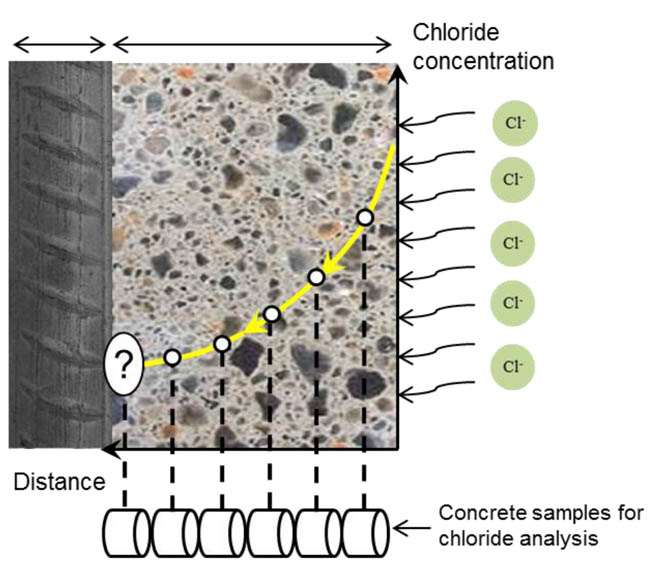
Analyzed from the perspective of chloride ion content, which mainly contains sand and gravel, concrete materials and so on. For the current stage of chlorine ion content detection, the main combination of potentiometric titration and ion chromatography. In the use of potentiometric titration to carry out the relevant detection work, it is necessary to effectively combine the advantages of the electrode. The silver electrode or chlorine electrode as the indicator electrode, along with the increase of Ag+ concentration, the potential will also appear corresponding changes. Using the calomel electrode as a reference electrode, combined with the advantages of a potentiometer or an acidimeter, the potential of the electrode is being composed of a power source in the solution is measured and calculated. If silver ions can be fused with chloride ions, a less soluble white precipitate of silver chloride will be formed. At the right point in time chloride ions will be rapidly converted into silver chloride precipitate material, then, you can choose to drop a small amount of silver nitrate material into it, thus causing a rapid change in the potential. After the previous relevant investigation and research can be found: in the use of this chemical detection method to carry out detection work, the staff can effectively combine the advantages of the secondary micro quotient method to calculate and determine the final results. Determine the titration focus by means of the voltage to the volume second derivative becomes zero. If the end point of the titration is found to appear close to zero, it can be determined that the volume was equal in the previous period when the silver nitrate solution was dropped. In this case, the function then appears to change to zero at a certain point in the volume of both positive and negative sign changes. For the volume at this point, it can then be determined as the final end point volume. The value is determined by combining the advantages of interpolation.
2.2 Detection of sodium sulfate content
In the detection of sodium sulfate content, there are mainly two more widely used detection methods. One is gravimetric method and the other is ion exchange gravimetric method. Among them, the weight method has a wider scope of application because of its easy operation and lower requirements for technicians. Specifically, when using this chemical detection method, it is necessary to effectively combine the advantages of barium chloride solution, combine it with the sulfate in the admixture specimen, and generate barium sulfate precipitate with a small degree of solution. After this precipitated material is burned at high temperature, the content of sodium sulfate can be calculated by precipitation. The final result can be expressed as xNa2SO4=M2-M1/M100. Where M is the mass of the sample in grams, M1 is the mass of the empty crucible, and M2 is the mass of the slag plus the crucible after burning, both in grams. Eventually, it is also necessary to convert barium sulfate to sodium sulfate by a factor with a reproducibility limit of 0. In terms of reproducibility, it is also necessary to keep it at 0.
2.3 Detection of slump increase value
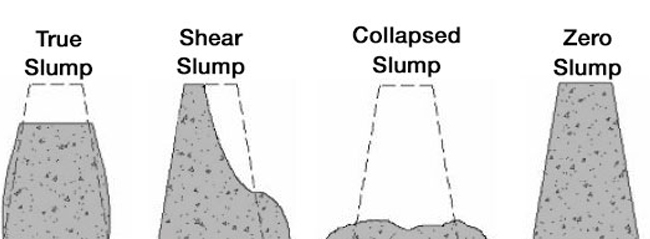
Comprehensive preliminary survey and research can be found: at this stage of the concrete admixture product performance testing, for the slump detection, mainly based on the "concrete pumping agent" JC473 in the relevant content, to complete the determination of the slump increase value. Specifically, the tested concrete material needs to be stored in the slump measurement bucket. In terms of the number of vibration, it needs to be vibrated 15 times per layer. The results of the three tests are combined and the average value is measured and selected. In the final result, it is necessary to be accurate to 1 mm.It should be noted that this method can be used to detect the slump of concrete, but it is not possible to determine the increase in the slump of concrete. Therefore, in the subsequent testing work, it is also necessary for the relevant staff to carefully study the relevant provisions and contents of the "Standard Test Methods for Properties of Ordinary Concrete Mixes", and choose the most appropriate testing method. The concrete specimen is evenly loaded into the test bucket in three layers with a small trowel. After completing the vibration work, make sure that the height of each layer is about 1/3 of the height of the bucket. In terms of the number of vibration, it needs to be controlled at about 25 times. At the same time, combined with the actual situation on site, the number of vibration is effectively adjusted and optimized.
2.4 Detection of solid content
For the solid content test, the specimen to be measured needs to be put into the corresponding weighing bottle. From the temperature point of view, it is also necessary to control it effectively, bake the specimen, and reach a constant state. The final result can be calculated by combining the solids content equation. x Solids content = (M2-M0)/(M1-M0), where M0 represents the weight of the weighing bottle itself, M1 represents the total weight of the weighing bottle with the liquid specimen, and M2 represents the total mass of the weighing bottle with the liquid specimen after the drying operation. All three of these values are expressed in grams, and in terms of repeatability, the values were limited to 0.3%. For reproducibility, the maximum limit was 0.5%.
2.5 Analysis of water content
For the detection of water content of concrete admixtures, it is also necessary to put a certain amount of powdered specimens to be measured into a constant amount of weighing bottle, baked at a certain temperature to a constant amount. For the final result, the formula water content X = (M2-M0)/(M1-M0) can be used. Where M0 represents the mass of the weighing flask itself and M1 represents the mass of the flask plus the powdered specimen after drying, the above values being expressed in units of grams. In terms of repeatability, the maximum value was kept at 0.3%. In terms of reproducibility, the maximum value should be controlled at about 0.5%.
Analyzed from the perspective of the performance of water reducing agent, it has a more obvious effect of water reduction and enhancement, and has a richer technical content. If you want to protect the overall slump of concrete materials, if you can combine the advantages of Water Reducing Agent can effectively reduce the amount of water used in the unit of concrete, reduce the overall water-cement ratio, so as to achieve the goal of improving the strength of the concrete structure. At the same time, the effective use of this method can also better improve the compactness and durability of concrete materials. If the overall water consumption of the concrete material remains unchanged, combined with the advantages of the water reducing agent, the fluidity of the concrete material can also be further improved. In the case of maintaining the stability of concrete strength, the use of Water Reducing Agent can also achieve the development goal of reducing the amount of cement. Reduce the input of unnecessary construction costs and reduce cost expenditure. At the current stage, various forms of water reducing agents have appeared on the market. Different varieties of Water Reducing Agent, in the scope of application, the use of the effect is also extremely obvious differences, the need for staff combined with the actual situation of the site for its effective use.
Analyzed from the perspective of the advantages of early-strength agent, as a kind of admixture to enhance the early strength of concrete, has been widely used in the production of concrete materials at this stage. If the early strength agent has the dual effect of early strength and water reduction, it can be called an early strength water reducing agent.
Specifically, the early-strength agent is mainly used in winter construction or repair works. If the temperature of the construction environment is found to be high, or the temperature is already lower than -5℃, this kind of admixture can not be used. For large volume concrete materials, a large amount of heat of hydration will be released in the process of use, and it is also not suitable for the use of early strength agent. At the current stage, the use of a wider range of early-strength agent is mainly by the sulfate early-strength agent, chloride salt early-strength agent. Among them, the most obvious benefit is the chlorine salt early strength agent, which contains sodium chloride, calcium chloride and other substances. In the process of using this kind of early-strengthening agent, the chemical reaction between calcium chloride and the relevant components in the cement can further enhance the solid-phase ratio in the cement stone, thus promoting the generation of the structure of the cement stone. After completing the above work content, it can also reduce the problem of excessive free water in concrete in traditional work, reduce the impact of porosity, and truly realize the development goal of high strength and high density. It should be noted that the chlorine salt early strength agent is likely to produce a certain corrosive effect on the reinforcing steel structure in the process of use. In view of this aspect of the problem, this kind of admixture is not suitable for prestressed concrete construction operations. In the study of sulfate early-strength agent, sodium sulfate early-strength agent is a widely used early-strength agent. From the point of view of its characteristics, it is easy to have strong water. And when mixed into the concrete material, it can also have a series of chemical reactions with other components in the cement, and finally generate the hydrated calcium sulfoaluminate that needs to be used. After the production of this substance, it can further accelerate the hardening speed of cement. Chloride early strength agent, sulfate early strength agent are inorganic salt early strength agent, if you need to carry out the corresponding work in a higher temperature state, you can not use this early strength agent. In the actual use of the process, the staff need to combine the characteristics of various types of early-strengthening agent and the actual situation of the site, choose the most appropriate early-strengthening agent.
From the point of view of the characteristics of the air-entraining agent, after applying the air-entraining agent to the actual work, it can introduce a large number of uniformly distributed, tiny bubbles of concrete admixture, and improve the compatibility of concrete materials. Especially in the case of lower temperatures, the advantages of this admixture are more obvious, and can further improve its frost resistance on the basis of durability. If a kind of air-entraining agent has the double effect of air-entraining and water-reducing at the same time, it can be called air-entraining water-reducing agent. At present, the more widely used air-entraining agents are rosin resins and fatty alcohol sulfonates. Among them, because rosin resin contains a large number of rosin thermopolymer, and its use is more effective, has been widely used in the current stage of work. Analyzed from the point of view of the advantages of causing water reducing agent, it can not only achieve the expected air-entraining effect, but also further enhance the overall strength of the concrete structure through the effective play of water reducing effect. If concrete construction work needs to be carried out in special environments, the advantages of this admixture can also be combined to solve the problem of insufficient durability of the material in the durability. Air-entraining agent, especially in ports, bridges, dams and other projects in the application of the most obvious effect, its operation is relatively simple, but also can enhance the concrete seepage effect, has been widely concerned about the relevant staff and use. In the subsequent research, it is also necessary for technicians to increase research efforts to expand the use of the admixture.
4 Conclusion
In the construction of concrete engineering construction work, the use of Concrete Admixture has become a normalized development trend, not only can change the overall performance of the Concrete Admixture, but also to meet the construction requirements of different environments, improve the quality of the project, to achieve twice the result with half the effort of the construction effect. In the later development process, the staff need to combine the advantages of concrete admixtures, its effective use.