In concrete production, variations in the type, chemical composition, mineral composition, and physical properties of cement can significantly affect the effectiveness of admixtures such as water-reducing agents. Properly adjusting the type, dosage, and blending method of admixtures is crucial for ensuring concrete fluidity, slump retention, and strength development. The following analysis addresses six common cement-related problems and provides specific admixture adjustment strategies.
1. High-alkali cement
Soluble alkali in cement (in Na₂O equivalent) comes from clay and admixtures. A suitable amount of alkali can promote hydration, which is beneficial to early strength development, and the fluidity increases with the increase of alkali content.
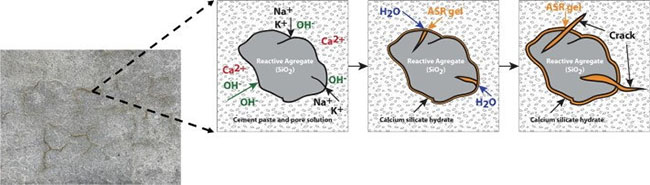
However, when the alkali content is too high, the following problems will occur: (1) the cement hydrates rapidly and the fluidity decreases significantly; (2) the plasticizing effect of the water-reducing agents is significantly reduced; (3) the slump loss rate increases significantly over time.
Possible reasons include: (1) alkali promotes the dissolution of C₃A (tricalcium aluminate). (2) With the participation of the setting regulator CaSO₄, a large number of AFt crystals are rapidly formed and coat the surface of C₃A . (3) The initial large number of AFt crystals hinder the flow and reduce the adaptability of the water-reducing agents. (4) Polycarboxylate water-reducing agent has a low pH. If it is used in combination with acidic retarder such as citric acid, it will undergo an acid-base neutralization exothermic reaction with high alkali cement, the temperature rises sharply, accelerates hydration, and leads to poor fluidity or even rapid disappearance of slump.
Adjustment strategies: (1) Prioritize high sulfate content water-reducing agents: sodium sulfate content above 20%. Because the CaSO₄ in low concentration water-reducing agents is highly water-soluble, it can provide a large amount of SO₃ in advance , which reacts with C₃A to generate AFt , preventing the decrease in fluidity and reducing slump loss. (2) Avoid acidic retarders: Do not use low pH polycarboxylate water-reducing agentswith acidic retarders such as citric acid, and use alkaline or neutral retarders instead. (3) Control the initial temperature of concrete: Prevent high temperature from accelerating the hydration reaction.
2. Low-alkali, sulfur-deficient cement
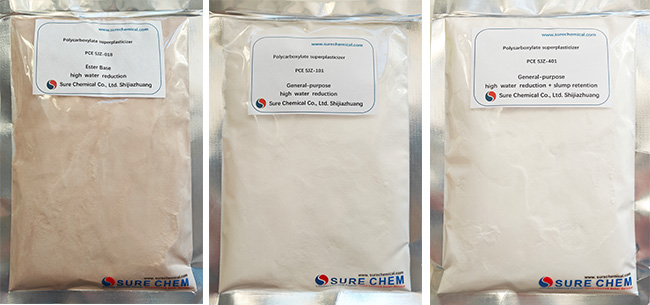
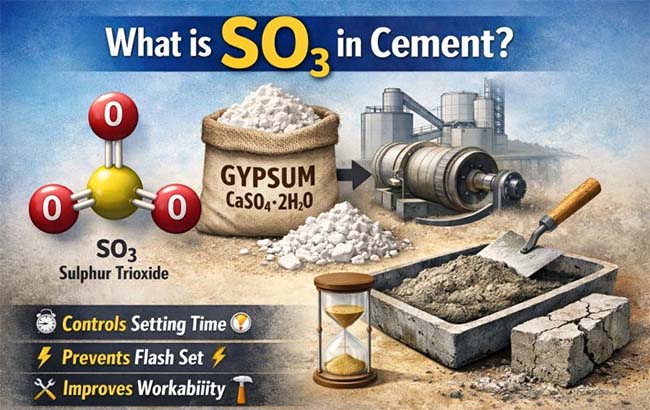
The optimal content of soluble alkali is usually 0.4%-0.6%, and below 0.4% is called low-alkali cement. Water-soluble alkali mostly exists as sulfates of alkali, hence it is also called sulfur-deficient or low-sulfur cement. The problems are: (1) poor fluidity after adding water-reducing agents, although increasing the amount of water-reducing agent has a certain effect, it will aggravate bleeding; (2) poor homogeneity of concrete, rapid slump loss, even if the amount of retarder is increased several times, it will not be effective. The fundamental reason is that there is insufficient SO₃ in the cement, which cannot effectively inhibit the hydration of C₃A. C₃A rapidly and in large quantities adsorbs water - reducing agent, reducing its plasticizing function.
Adjustment strategies: (1) Supplement with soluble sulfates such as sodium sulfate to increase SO₃ content , which is the most effective method. (2) Do not blindly increase retarder: the effect is not obvious and may bring other problems. (3) Select water-reducing agents with high sulfate content, or compound sulfate components in water-reducing agents.
3. Cement with high C₃A content
The main minerals in cement include C₃S , C₂S , C₃A , and C₄AF , with the adsorption activity order being: C₃A > C₄AF > C₃S > C₂S , among which C₃A has the largest adsorption capacity for water-reducing agents. When the C₃A content exceeds 8%, it significantly affects fluidity. This manifests as a decrease in fluidity and an increase in slump loss over time when the water-reducing agent dosage is constant , with a fixed increase in C₃A content. This is because most of the added water-reducing agent is adsorbed by C₃A , resulting in insufficient dispersion of the main minerals such as C₃S by the water-reducing agent, thus reducing the fluidity of the cement paste.
Adjustment strategies : (1) Supplement SO₃ : Using water-reducing agents with high sulfate content has a certain effect. (2) Select a suitable retarder , such as adding a certain amount of hydroxycarboxylate retarder (such as sodium gluconate), which can effectively inhibit the adsorption and hydration of C₃A. ( 2) Increase the dosage of water-reducing agent . Inexpensive water-reducing agents can be used and the dosage can be increased appropriately to ensure that there is still residual water-reducing agent after C₃A adsorption to disperse minerals such as C₃S. Moreover, due to the low price, it will not increase the cost of use.
4. Cement with high blending content
Cement often incorporates a large amount of admixtures, such as fly ash, volcanic ash, slag, and finely ground limestone. These admixtures vary greatly in terms of activity, water demand, mineral composition, and adsorption performance on admixtures, which affects the adaptability of water-reducing agents.
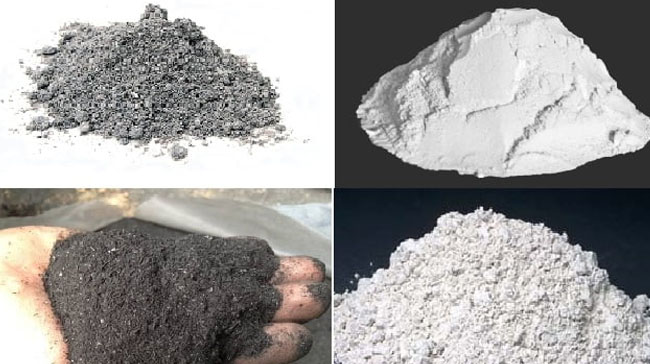
The porous particles of fly ash cement easily absorb water, increasing water demand; after overflow, it increases bleeding; increases shrinkage deformation; affects the bonding between cement paste and aggregate interface; a hydrophobic film may form on the surface of carbon particles, hindering water penetration and affecting fly ash activity; carbon competes with cement to adsorb water-reducing agents, reducing fluidity.
Adjustment strategies: (1) Increase the amount of admixture; (2) Add a certain amount of high-quality air-entraining agent.
Slag cement contains a lot of aluminates, so more gypsum is needed as a setting regulator. Slag cement produced by ordinary silicate cement process is more prone to sulfur deficiency.
Adjustment strategies: (1) Use water-reducing agent with high sulfate content; (2) Add high-quality air-entraining agent. Small and dense air bubbles can reduce the adsorption of aluminates on water-reducing agent, but the dosage needs to be increased appropriately.
5. Cement with added gypsum that has poor water solubility
Gypsum, used as a setting regulator, is added in a dosage matched to the C₃A content. After adding water , it forms ettringite, which is adsorbed onto the C₃A surface , controlling hydration. Dihydrate gypsum ( CaSO₄ · H₂O ) has the best water solubility and is the most commonly used. However, excessively high grinding temperatures during production can cause dihydrate gypsum to transform into hemihydrate gypsum ( CaSO₄ · 1 /2H₂O ) or anhydrous gypsum ( CaSO₄ , i.e., hard gypsum ). Some cement plants also directly use anhydrous gypsum or industrial waste gypsum (fluorogypsum, desulfurization gypsum, phosphogypsum, etc.). Hard gypsum and waste gypsum have poor water solubility and dissolve slowly. If lignosulfonate, calcium saccharide, or other retarder/water-reducing agents are used in the admixture, it will further inhibit gypsum dissolution. If gypsum cannot dissolve quickly, C₃A rapidly hydrates to form a large amount of calcium aluminate crystals, causing false setting (a small amount of cement has set, but a large number of cement particles have not yet hydrated, and the paste loses its fluidity).
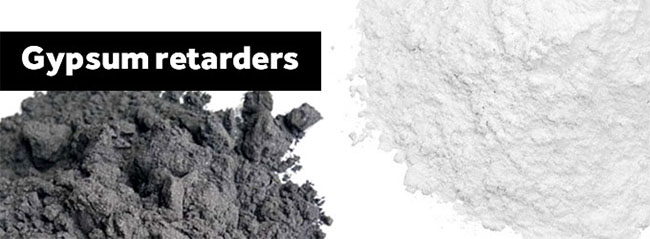
Adjustment strategies: (1) Avoid using water-reducing agents such as calcium lignosulfonate, sodium lignosulfonate, and calcium saccharide that affect the dissolution of gypsum. (2) Controlling the amount of the above-mentioned water-reducing agents can have a certain effect, but it is best to replace them. (3) Supplement SO₃ : Adding a large amount of admixtures that can supplement SO₃ can also control the false setting phenomenon.
6. Fresh cement
Fresh cement is characterized by a short storage time after production, high cement temperature, and rapid hydration. During the grinding process, particles generate electrical charges and adhere to each other, affecting the dispersion of the water-reducing agent, which manifests as an increased slump loss rate.
Adjustment strategies: (1) Extend storage time: waiting for the cement temperature to drop below 50℃ is beneficial to improving the compatibility with admixtures. (2) If the storage time cannot be extended, increasing the amount of retarder will have a certain effect.
7. Cement with a large specific surface area
The ideal specific surface area for cement is around 5000cm²/g. Cement with an excessively large specific surface area has the following characteristics: it requires a large amount of water, more admixtures are needed to achieve the same fluidity, and it develops its early strength quickly, but its later strength and slump retention are unfavorable.
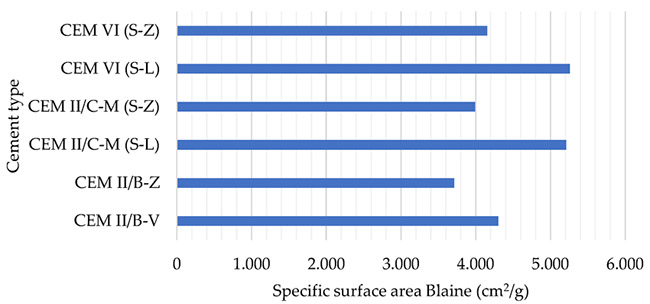
The adjustment strategy is to appropriately increase the dosage of admixtures such as water-reducing agents and retarders. Of course, to avoid increasing usage costs, inexpensive water-reducing agents can be used, and the dosage of both water-reducing agents and retarders can be appropriately increased, which can still achieve good technical and economic benefits.
In summary, the mineral composition and morphology of cement clinker and admixtures are complex, and numerous factors influence the compatibility of water-reducing agents, making it difficult to solve all problems with a single method. Currently, the widely promoted polycarboxylate high-performance water-reducing agents exhibit relatively better compatibility with cement than traditional high-efficiency water-reducing agents, but compatibility issues still exist. Changing the incorporation time and method of the water-reducing agent (such as post-addition) can improve compatibility, but incompatibility problems still arise with certain special cements. The compatibility of water-reducing agents with cement is a highly complex topic, and in-depth and detailed research continues.
Causes and countermeasures of several common concrete cracks
Essential Questions and Answers in the Application of Polycarboxylate Superplasticizers
Precautions for the application of polycarboxylate superplasticizers (Technical details)
Application of Silica Fume in Concrete from the Perspective of Its Mechanism of Action
The Role of Silica Fume in Concrete-Optimizing Microstructure, Enhancing Macro Performance
14 Must-See Products at the Upcoming Concrete Show South America 2025
The Impact of Silica Fume on Concrete Performance
Silica fume (microsilica) as a Concrete Admixture
The Role of Silica Fume in UHPC
2fcl Microsilica as a trial order to South America market
Wide uses in the refractory industry of silica fume
Introduction of Cement Content-reducing Admixture (II): Technical Analysis of Cement Content-Reducing Admixtures
Introduction of Cement Content-reducing Admixture (I): The role of Cement Content-reducing Admixture and its influence on concrete strength
Comprehensive Analysis of Powder Water-Reducing Admixtures
Incorporation Methods and Considerations for Functional Concrete Admixtures
Several considerations for selecting functional concrete materials
Boosting Concrete Efficiency: The Power of Admixture Synergy
The Role of Silica Fume in UHPC
Enhancing Concrete Quality: Strategies to Address Common Issues with Water-Reducing Admixtures
Polycarboxylate Superplasticizers in Concrete: Addressing Common Challenges and Implementing Effective Solutions
Optimizing Admixture Compatibility for Robust Concrete: Strategies to Enhance Durability and Workability
Research on the Impact of Solid Content in Water-Reducing Admixtures on Concrete Performance
Delayed Setting and Hard Crust Phenomenon in Concrete
The effect of polycarboxylate superplasticizer on the strength and hydration performance of alkali slag building materials
Mastering Water Reducers: Expert Solutions for Six Types of 'Problem' Cement
Optimizing Concrete with Polycarboxylate Superplasticizers: Tackling Challenges and Boosting Performance
Ensuring High-Quality Concrete: Tackling Bleeding, Segregation, and Paste Bleeding in Concrete Mixtures
Unlocking the Secrets of Polycarboxylate Superplasticizers: Synthesis and Advanced Dispersing Mechanisms Demystified
Optimizing Concrete Performance with Polycarboxylate Superplasticizers: A Comprehensive Guide to Spring Season Adjustments
The adaptability of polycarboxylic acid admixture and other raw materials of concrete
Research on Concrete Admixture testing and its application
Causes and prevention measures of 8 appearance defects of concrete structures
Precautions when using polycarboxylate superplasticizer(PCE) in concrete
The role of defoaming agents in Concrete
Regarding the compound raw materials of polycarboxylate water-reducing agent
Three Key Considerations for Additive Usage in Concrete Production
Fiber Reinforced Concrete: Types, Properties and Applications
Some common problems in the application of PCE
About the overdosage of concrete water reducer
How to deal with mildew of Polycarboxylate Superplasticizer
Effects of Admixtures and Admixtures on the Properties of Cement Concrete
Common problems and analysis of polycarboxylate water reducer in ready-mixed concrete
Retarders and Concrete Setting
How to select and use concrete admixtures
Tips of application of polycarboxylate high-performance water reducer(VII)
Tips of application of polycarboxylate high-performance water reducer(VI)
Tips of application of polycarboxylate high-performance water reducer(V)
Tips of application of polycarboxylate high-performance water reducer(IV)
Tips of application of polycarboxylate high-performance water reducer(III)
Tips of application of polycarboxylate high-performance water reducer(II)
Tips of application of polycarboxylate high-performance water reducer(I)
The quality of concrete can be improved with the help of burnt straw.
The price of concrete admixture’s raw materials is rising rapidly recently!
About Polyether Macromonomers and Polycarboxylate Superplasticizer(PCE)
Suggestion on "The Slump loss of concrete by using polycarboxylate superplasticizer (PCE) "
The 23 most popular Concrete Admixtures of global market
Polycarboxylate Superplasticizer (PCE) 50% liquid export to Russia under the COVID-19 pandemic
Polycarboxylate superplasticier 50% liquid export to Vietnam in Flexi bag
TPEG+HPEG export to Middle East market
Polycarboxylate superplasticizer +shrinkage-reducing agent +defoaming agent +air-entraining agent
We made a speech at PCE 2019 !
PCE heat resistant grade export to Russian market
PCE powder export to Indonesia !
Flexi bag: A new package for polycarboxylate superplasticizer 50% liquid (POLYETHERS IN PRIMARY FORMS)
PCE Introduction download
Descargar la introduccion
The quality of concrete can be improved with the help of burnt straw.
NOR containers help to save the cost at so high sea freight level !
The 23 most popular Concrete Admixtures of global market
SNF 3% EXPORTED
Sodium Naphthalene formaldehyde loaded today for PT.Kao indonesia on this weekend vessel. |


