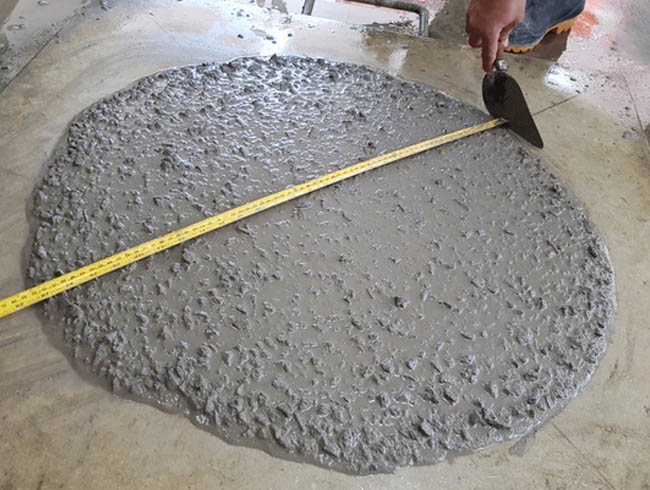
Concrete flowability refers to the ability of fresh concrete mixtures to move under their own weight or external force, filling the formwork uniformly and compactly. It is an essential component of concrete workability. Good flowability ensures smooth placement during casting, effective compaction, and reduces surface defects such as honeycombs and laitance.
I. Main Influencing Factors
1. Water Content
When the mix proportion is fixed, water content becomes the most critical factor affecting flowability. Increasing water content improves flowability; however, excessive water can cause bleeding and segregation.
2. Cement Type and Dosage
Pozzolanic cement generally shows poorer flowability compared to ordinary Portland cement. If cement dosage is too low, flowability is also reduced.
3. Aggregate Properties
-Grading: Continuously graded aggregates provide denser packing and better flow compared to gap-graded aggregates.
-Particle Size: Larger coarse aggregate size and a properly balanced sand ratio improve flowability. If the sand ratio is too low, mortar becomes insufficient, reducing flowability; if too high, mortar thickens and resists flow.
-Shape: Crushed stone, with rough surfaces, has lower flowability than rounded gravel. A high proportion of flaky or elongated aggregates will further reduce flowability.
4. Chemical Admixtures
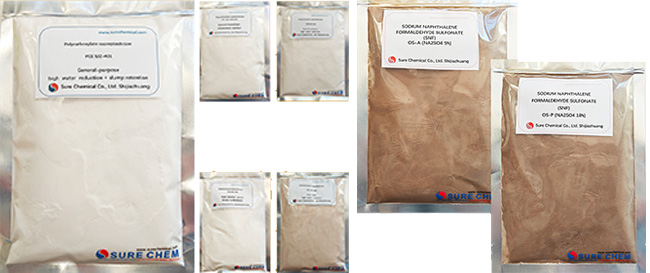
Superplasticizers can significantly enhance flowability without increasing water content. Air-entraining agents, by introducing controlled micro-bubbles, can also improve flowability.
5. Time and Temperature
With the progress of cement hydration and under higher ambient temperatures, concrete loses slump and flowability over time.
II. Performance Indicators
1. Slump Test
The slump test is suitable for concrete with relatively high flowability (slump range 50–150 mm). It is measured using a standard slump cone. The larger the slump value, the better the flowability of the concrete.
2. Vebe Consistency Test
The Vebe test is used for dry or stiff concrete (slump <10 mm). The shorter the Vebe time, the better the flowability.
III. Methods for Improving Concrete Flowability
Improving the flowability of concrete must be carried out while ensuring strength and durability, and avoiding bleeding or segregation. This can mainly be achieved through adjustments in material selection and mix design optimization. The main approaches are as follows:
1. Proper Adjustment of Water Content and Water-to-Binder Ratio
Within the permissible limits of the mix design, moderately increasing water content can directly enhance flowability. However, the water-to-binder ratio (the mass ratio of water to cementitious materials) must be strictly controlled. Excess water can weaken strength and cause bleeding or segregation.
If significant improvement in flowability is needed, water-reducing admixtures should be combined, rather than simply adding more water.
2. Incorporation of Chemical Admixtures (Most Common Method)
-Superplasticizers (High-Range Water Reducers): These admixtures disperse cement particles and reduce flocculated structures, thereby dramatically improving flowability without increasing water content. For example, high-performance water reducers can increase slump by 100–200 mm, while also minimizing slump loss.
-Air-Entraining Agents: Introducing 3%–5% finely dispersed micro-air bubbles improves the lubrication of mortar, thus enhancing flowability, especially in cases where aggregate grading is suboptimal.
-Slump-Retaining Admixtures (Workability-Retaining Agents): When used together with superplasticizers, they reduce slump loss during transportation and waiting, ensuring stable flowability until placement.
3. Optimization of Aggregate Grading and Sand Ratio
-Aggregate Grading: Using continuously graded coarse aggregates (e.g., 5–25 mm range) helps reduce voids between particles, making the mixture easier to flow. Aggregates with a single particle size or discontinuous grading should be avoided, as they create poor packing and higher flow resistance.
-Sand Ratio Adjustment: The sand ratio (the percentage of sand in the total mass of fine and coarse aggregates) is a key factor.
Too low a sand ratio → insufficient mortar to coat aggregates, leading to poor flowability.
Too high a sand ratio → mortar becomes overly viscous, increasing internal friction and reducing flowability.
The optimal sand ratio should be determined through trial mixes. Typically, 30%–40% is suitable, ensuring that mortar both coats the aggregates and provides good flowability.
-Aggregate Size and Shape: Prefer larger coarse aggregates (e.g., 20–31.5 mm, within design specifications) and smoother river gravel/pebbles over crushed stone, as they reduce flow resistance. The content of flaky or elongated particles should be limited to ≤10% to avoid hindering flow.
4. Adjustment of Cement Type and Dosage
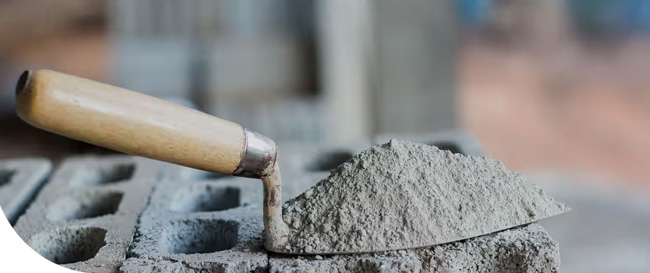
-Cement Type: Ordinary Portland cement and Portland cement generally provide better flowability compared to pozzolanic cement or fly ash cement, which require more water to achieve the same flow performance. Therefore, when flowability is a priority, it is preferable to use cement types with lower water demand.
-Cement Dosage: Within a reasonable range, moderately increasing the amount of cement (or total binder content) can enhance the volume of mortar, thereby improving flowability. However, excessive cement content should be avoided, as it may result in excessive heat of hydration and possible shrinkage issues.
5. Control of Construction Environment and Process
-Temperature Control: In hot weather, cement hydration accelerates and water evaporates quickly, leading to reduced flowability. To mitigate this, cooling measures can be taken, such as using chilled mixing water, cooling aggregates, or even adding ice during batching. Shortening transportation and placement time is also critical to minimize slump loss.
-Mixing Process: Extending the mixing time helps ensure uniform dispersion of cement particles and admixtures, thereby improving flowability. In addition, adopting secondary mixing (e.g., remixing after transportation) can restore part of the lost flowability, especially useful for ready-mixed concrete transported over longer distances.
6. Key Considerations
When improving flowability, it is important not to excessively pursue high slump, as this may cause segregation or bleeding, which compromises strength and durability.
In practice, flowability should always be balanced with engineering requirements. For example, pumped concrete requires higher flowability, while pavement concrete requires moderate flowability. Trial mixes should be conducted to determine the optimal design, balancing both workability and long-term performance.
IV. Balancing Workability and Stability in Concrete Mix Optimization
When adjusting concrete mix proportions to improve workability, the key is to optimize material parameters while ensuring strength, durability, and dimensional stability. The core challenge is balancing 'workability enhancement' with 'concrete stability' (resistance to segregation and bleeding). The main considerations are as follows:
1. Prioritize Admixture Adjustment Over Increasing Water Content
-High-performance water-reducers as the primary tool: Incorporating high-efficiency or high-performance water-reducing agents disperses cement particles and breaks flocculated structures, significantly enhancing workability without increasing water content. For example, adding 2–3% high-efficiency water-reducer can raise slump from 50mm to over 200mm at the same water-cement ratio.
-Avoid blind water addition: Simply increasing water may improve workability but also raises the water-cement ratio, reducing strength and causing segregation and bleeding. If water content must be adjusted, increase cementitious material proportion accordingly to maintain the original water-cement ratio.
2. Optimize the Cementitious Material System
-Cement selection: Prefer cements with lower water demand (e.g., Ordinary Portland Cement) and avoid high water-demand types (e.g., pozzolanic cements), which require more water to achieve the same workability, potentially reducing strength.
-Use of supplementary cementitious materials (SCMs): Moderate replacement of cement with fly ash (water demand ≤100%) or slag can improve particle gradation, reduce overall water demand, and indirectly increase workability. For instance, 15–30% fly ash replacement can reduce mixing water by 5–10%.
-Control total cementitious content: Within a reasonable range (typically 300–500 kg/m³), increasing cementitious materials slightly can enhance mortar volume and workability but avoid excessive amounts that may increase hydration heat or shrinkage.
3. Fine-tune Aggregate Parameters
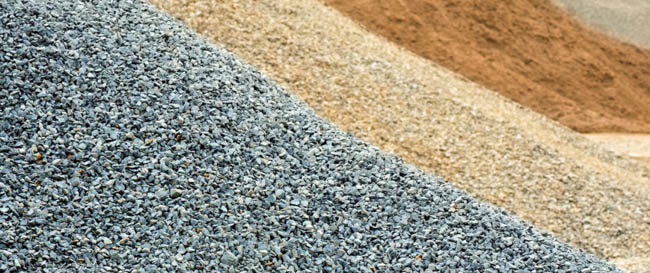
-Aggregate gradation optimization: Use continuous-graded coarse aggregates (e.g., 5-10 mm + 10-20 mm) to reduce voids and flow resistance. For fine aggregates (sand), medium sand with fineness modulus 2.3–3.0 is recommended; avoid very fine sand which increases water demand and stiffens the mortar.
-Optimal sand ratio: The proportion of sand to total aggregate mass is critical:
Too low: insufficient mortar to coat coarse aggregate → poor workability, bottom segregation.
Too high: excess friction among sand particles → poor flowability, sticky consistency.
Trial mixes usually determine the optimal sand ratio (30–40%; for pumped concrete, 35–45%).
Aggregate size and shape: Prefer larger coarse aggregates (20–31.5 mm) with smooth surfaces (e.g., river pebbles) and limit flaky/elongated particles to ≤10% to reduce flow resistance.
4. Auxiliary Parameters
-Air-entraining agents: Introducing 3–5% microbubbles can increase mortar lubrication and improve workability, especially in poorly graded mixes. Excessive air content can reduce strength.
-Plasticizers/ workability retention agents: For concrete requiring extended transport (>1h), adding a retarder or stabilizer helps limit slump loss (e.g., initial 200mm slump loses ≤50mm after 1h).
5. Trial Mix Verification and Dynamic Balance
-Testing: Verify adjusted mixes by measuring slump (or spread), observing cohesion and water retention. Segregation or bleeding indicates excessive workability adjustment.
-Target: Achieve 'adequate and stable workability', e.g., pumped concrete with 180–220mm slump, ≤50mm slump loss in 1h, and no segregation or bleeding, ensuring both constructability and long-term performance.
-Core Principle: Center mix design adjustments on admixtures while coordinating aggregate gradation, sand ratio, and cementitious material system. This allows precise control of workability without sacrificing strength or stability.
14 Must-See Products at the Upcoming Concrete Show South America 2025
The Impact of Silica Fume on Concrete Performance
Silica fume (microsilica) as a Concrete Admixture
The Role of Silica Fume in UHPC
2fcl Microsilica as a trial order to South America market
Wide uses in the refractory industry of silica fume
Introduction of Cement Content-reducing Admixture (II): Technical Analysis of Cement Content-Reducing Admixtures
Introduction of Cement Content-reducing Admixture (I): The role of Cement Content-reducing Admixture and its influence on concrete strength
Comprehensive Analysis of Powder Water-Reducing Admixtures
Incorporation Methods and Considerations for Functional Concrete Admixtures
Several considerations for selecting functional concrete materials
Boosting Concrete Efficiency: The Power of Admixture Synergy
The Role of Silica Fume in UHPC
Enhancing Concrete Quality: Strategies to Address Common Issues with Water-Reducing Admixtures
Polycarboxylate Superplasticizers in Concrete: Addressing Common Challenges and Implementing Effective Solutions
Optimizing Admixture Compatibility for Robust Concrete: Strategies to Enhance Durability and Workability
Research on the Impact of Solid Content in Water-Reducing Admixtures on Concrete Performance
Delayed Setting and Hard Crust Phenomenon in Concrete
The effect of polycarboxylate superplasticizer on the strength and hydration performance of alkali slag building materials
Mastering Water Reducers: Expert Solutions for Six Types of 'Problem' Cement
Optimizing Concrete with Polycarboxylate Superplasticizers: Tackling Challenges and Boosting Performance
Ensuring High-Quality Concrete: Tackling Bleeding, Segregation, and Paste Bleeding in Concrete Mixtures
Unlocking the Secrets of Polycarboxylate Superplasticizers: Synthesis and Advanced Dispersing Mechanisms Demystified
Optimizing Concrete Performance with Polycarboxylate Superplasticizers: A Comprehensive Guide to Spring Season Adjustments
The adaptability of polycarboxylic acid admixture and other raw materials of concrete
Research on Concrete Admixture testing and its application
Causes and prevention measures of 8 appearance defects of concrete structures
Precautions when using polycarboxylate superplasticizer(PCE) in concrete
The role of defoaming agents in Concrete
Regarding the compound raw materials of polycarboxylate water-reducing agent
Three Key Considerations for Additive Usage in Concrete Production
Fiber Reinforced Concrete: Types, Properties and Applications
Some common problems in the application of PCE
About the overdosage of concrete water reducer
How to deal with mildew of Polycarboxylate Superplasticizer
Effects of Admixtures and Admixtures on the Properties of Cement Concrete
Common problems and analysis of polycarboxylate water reducer in ready-mixed concrete
Retarders and Concrete Setting
How to select and use concrete admixtures
Tips of application of polycarboxylate high-performance water reducer(VII)
Tips of application of polycarboxylate high-performance water reducer(VI)
Tips of application of polycarboxylate high-performance water reducer(V)
Tips of application of polycarboxylate high-performance water reducer(IV)
Tips of application of polycarboxylate high-performance water reducer(III)
Tips of application of polycarboxylate high-performance water reducer(II)
Tips of application of polycarboxylate high-performance water reducer(I)
The quality of concrete can be improved with the help of burnt straw.
The price of concrete admixture’s raw materials is rising rapidly recently!
About Polyether Macromonomers and Polycarboxylate Superplasticizer(PCE)
Suggestion on "The Slump loss of concrete by using polycarboxylate superplasticizer (PCE) "
The 23 most popular Concrete Admixtures of global market
Polycarboxylate Superplasticizer (PCE) 50% liquid export to Russia under the COVID-19 pandemic
Polycarboxylate superplasticier 50% liquid export to Vietnam in Flexi bag
TPEG+HPEG export to Middle East market
Polycarboxylate superplasticizer +shrinkage-reducing agent +defoaming agent +air-entraining agent
We made a speech at PCE 2019 !
PCE heat resistant grade export to Russian market
PCE powder export to Indonesia !
Flexi bag: A new package for polycarboxylate superplasticizer 50% liquid (POLYETHERS IN PRIMARY FORMS)
PCE Introduction download
Descargar la introduccion
The quality of concrete can be improved with the help of burnt straw.
NOR containers help to save the cost at so high sea freight level !
The 23 most popular Concrete Admixtures of global market
SNF 3% EXPORTED
Sodium Naphthalene formaldehyde loaded today for PT.Kao indonesia on this weekend vessel. |


