I. Practical applications in Concrete
Silica fume(Microsilica) is a commonly used mineral admixture in concrete. Owing to its high pozzolanic reactivity and ultrafine particle size, it offers a wide range of practical applications in concrete as follows:
1. Enhancing Concrete Strength
Silica fume(Microsilica) reacts with calcium hydroxide produced during cement hydration through a secondary hydration reaction, forming additional calcium silicate hydrate (C-S-H) gel. This gel fills in the internal voids of the concrete matrix, significantly improving both compressive and flexural strength. It is especially suitable for producing high-strength concrete (e.g., C80 and above).
2. Improving Concrete Durability
(1) Water Permeability Resistance:
The ultra-fine particles of Silica fume (Microsilica) fill capillary pores within concrete, greatly reducing porosity and enhancing impermeability. This makes it ideal for water-conservancy structures, basements, and other waterproofing-critical applications.
(2) Corrosion Resistance:
Silica fume (Microsilica) reduces the amount of calcium hydroxide in concrete, thereby lowering the risk of sulfate and chloride attacks. It is recommended for marine, chemical, and other corrosive environments.
3. Enhancing Workability
In high-performance concrete, Silica fume (Microsilica) fills voids between cement particles, improving the cohesiveness and fluidity of the mix. It reduces bleeding and segregation, facilitating pumping and placement.

4. Specialized Applications
(1) Shotcrete: Enhances early strength and bond strength, reducing rebound loss and increasing spraying efficiency.
(2) Concrete Repair: Improves bonding strength between repair mortar and base concrete, enhancing durability of repair work.
II. Impact on Concrete Shrinkage
Silica fume (Microsilica) generally increases shrinkage, though the extent varies depending on dosage, mix design, and curing conditions.
1. Increased Drying Shrinkage
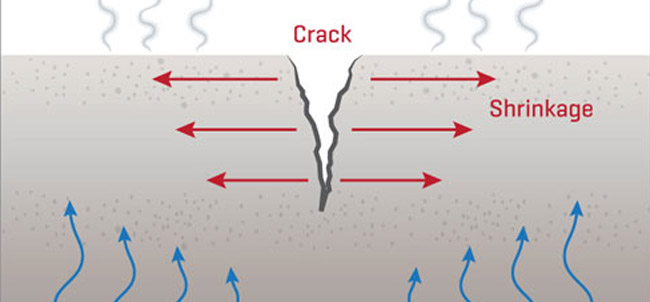
Its ultrafine particles increase water demand. Its high reactivity leads to dense internal structure, making it harder to retain water—thus causing more noticeable shrinkage as moisture evaporates.
2. Increased Autogenous Shrinkage
In low water-binder ratio concrete, silica fume consumes free water quickly during hydration, causing early-stage shrinkage due to self-desiccation. The higher the dosage, the greater the autogenous shrinkage.

3. Thermal Shrinkage Variability
While Silica fume (Microsilica) accelerates early hydration (increasing early thermal rise), its pore-refining effects may help reduce long-term shrinkage stress caused by temperature fluctuations.
4. Mitigation Measures: To prevent cracking due to shrinkage, consider optimizing mix design (e.g., blending with other SCMs, adjusting water-binder ratio) and applying effective curing (e.g., moist curing, steam curing).
III. Strengthening Mechanisms of Silica Fume
1. Filler Effect
With an average particle size around 0.1 μm (about 1/100 the size of cement particles), silica fume fills the spaces between cement grains, refining pore structure and increasing concrete density and strength.
2. Pozzolanic Reaction
Its reactive silica content chemically reacts with calcium hydroxide to form additional C-S-H gel, improving the binding of aggregates and cement paste, thereby significantly enhancing compressive and flexural strength.
3. Interface Improvement:
Silica fume reduces oriented crystal growth of calcium hydroxide at the aggregate-paste interface, strengthening the transition zone and improving bond strength, which further enhances the overall structural integrity.
IV. Recommended Dosage of Silica Fume in Concrete

Typical optimal dosage ranges from 5% to 10% by weight of cementitious material. Specific applications include:
| Concrete type |
Dosage |
General high-durability concrete |
3% – 6% |
High-strength concrete (C60–C120) |
5% – 12% |
Ultra-High-Performance Concrete (UHPC)/Reactive Powder Concrete (RPC) |
10% – 30% |
Self-Compacting Concrete (C40–C80) |
3% – 8% |
Underwater concrete (without anti-washout admixture) |
10% – 15% |
Mass concrete for low-heat applications |
4% – 8% |
According to Chinese standards GB/T21086-2007 and JGJ/T400-2014, when Silica fume (Microsilica) contains ≥70% reactive SiO₂, dosage should not exceed 10%, if reactive SiO₂ ≥50%, the limit is 15%.
14 Must-See Products at the Upcoming Concrete Show South America 2025
The Impact of Silica Fume on Concrete Performance
Silica fume (microsilica) as a Concrete Admixture
The Role of Silica Fume in UHPC
2fcl Microsilica as a trial order to South America market
Wide uses in the refractory industry of silica fume
Introduction of Cement Content-reducing Admixture (II): Technical Analysis of Cement Content-Reducing Admixtures
Introduction of Cement Content-reducing Admixture (I): The role of Cement Content-reducing Admixture and its influence on concrete strength
Comprehensive Analysis of Powder Water-Reducing Admixtures
Incorporation Methods and Considerations for Functional Concrete Admixtures
Several considerations for selecting functional concrete materials
Boosting Concrete Efficiency: The Power of Admixture Synergy
The Role of Silica Fume in UHPC
Enhancing Concrete Quality: Strategies to Address Common Issues with Water-Reducing Admixtures
Polycarboxylate Superplasticizers in Concrete: Addressing Common Challenges and Implementing Effective Solutions
Optimizing Admixture Compatibility for Robust Concrete: Strategies to Enhance Durability and Workability
Research on the Impact of Solid Content in Water-Reducing Admixtures on Concrete Performance
Delayed Setting and Hard Crust Phenomenon in Concrete
The effect of polycarboxylate superplasticizer on the strength and hydration performance of alkali slag building materials
Mastering Water Reducers: Expert Solutions for Six Types of 'Problem' Cement
Optimizing Concrete with Polycarboxylate Superplasticizers: Tackling Challenges and Boosting Performance
Ensuring High-Quality Concrete: Tackling Bleeding, Segregation, and Paste Bleeding in Concrete Mixtures
Unlocking the Secrets of Polycarboxylate Superplasticizers: Synthesis and Advanced Dispersing Mechanisms Demystified
Optimizing Concrete Performance with Polycarboxylate Superplasticizers: A Comprehensive Guide to Spring Season Adjustments
The adaptability of polycarboxylic acid admixture and other raw materials of concrete
Research on Concrete Admixture testing and its application
Causes and prevention measures of 8 appearance defects of concrete structures
Precautions when using polycarboxylate superplasticizer(PCE) in concrete
The role of defoaming agents in Concrete
Regarding the compound raw materials of polycarboxylate water-reducing agent
Three Key Considerations for Additive Usage in Concrete Production
Fiber Reinforced Concrete: Types, Properties and Applications
Some common problems in the application of PCE
About the overdosage of concrete water reducer
How to deal with mildew of Polycarboxylate Superplasticizer
Effects of Admixtures and Admixtures on the Properties of Cement Concrete
Common problems and analysis of polycarboxylate water reducer in ready-mixed concrete
Retarders and Concrete Setting
How to select and use concrete admixtures
Tips of application of polycarboxylate high-performance water reducer(VII)
Tips of application of polycarboxylate high-performance water reducer(VI)
Tips of application of polycarboxylate high-performance water reducer(V)
Tips of application of polycarboxylate high-performance water reducer(IV)
Tips of application of polycarboxylate high-performance water reducer(III)
Tips of application of polycarboxylate high-performance water reducer(II)
Tips of application of polycarboxylate high-performance water reducer(I)
The quality of concrete can be improved with the help of burnt straw.
The price of concrete admixture’s raw materials is rising rapidly recently!
About Polyether Macromonomers and Polycarboxylate Superplasticizer(PCE)
Suggestion on "The Slump loss of concrete by using polycarboxylate superplasticizer (PCE) "
The 23 most popular Concrete Admixtures of global market
Polycarboxylate Superplasticizer (PCE) 50% liquid export to Russia under the COVID-19 pandemic
Polycarboxylate superplasticier 50% liquid export to Vietnam in Flexi bag
TPEG+HPEG export to Middle East market
Polycarboxylate superplasticizer +shrinkage-reducing agent +defoaming agent +air-entraining agent
We made a speech at PCE 2019 !
PCE heat resistant grade export to Russian market
PCE powder export to Indonesia !
Flexi bag: A new package for polycarboxylate superplasticizer 50% liquid (POLYETHERS IN PRIMARY FORMS)
PCE Introduction download
Descargar la introduccion
The quality of concrete can be improved with the help of burnt straw.
NOR containers help to save the cost at so high sea freight level !
The 23 most popular Concrete Admixtures of global market
SNF 3% EXPORTED
Sodium Naphthalene formaldehyde loaded today for PT.Kao indonesia on this weekend vessel. |


